Cloud providers are the world's largest purchasers of renewable energy, yet they only release carbon data to customers monthly, with delays of several months. The Real Time Cloud (RTC) standard changes this by normalising energy and carbon metadata from AWS, Azure, and GCP into a single, comparable dataset — enabling accurate emissions reporting, carbon-aware workload scheduling, and regulatory compliance.
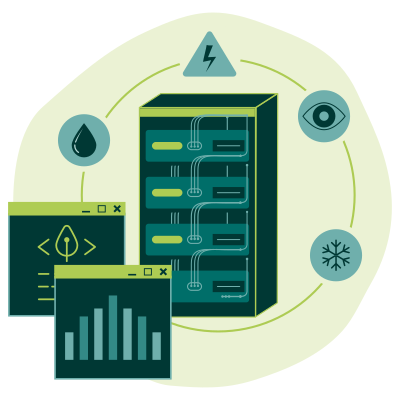
Developed with cloud providers, enterprise consumers, and data partners








































Cloud computing's environmental impact is growing rapidly, yet the data needed to measure and reduce it has been fragmented, delayed, and incomparable across providers.
Every organisation trying to measure the carbon footprint of its cloud workloads faced the same foundational problem: the data from cloud providers was late, incomplete, and incomparable. If you ran workloads across AWS, Azure, and GCP, you received three different reports using three different methodologies on three different timescales. RTC eliminates this fragmentation by establishing the first cross-provider standard for energy and carbon disclosure, creating a single source of truth that the entire industry can build upon.
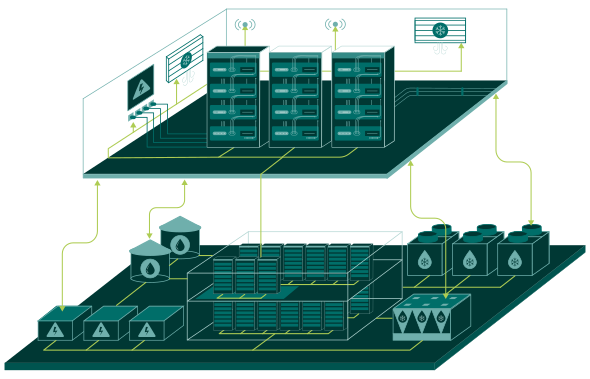
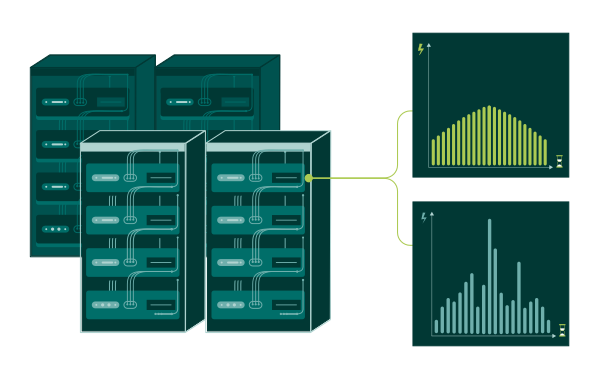


Real-time carbon visibility — Move from monthly reports with months of delay to minute-by-minute carbon intensity data for informed workload scheduling

Accurate Scope 3 reporting — Include cloud provider renewable energy purchases in your emissions calculations, eliminating systematically inflated estimates

Cross-provider comparison — Compare carbon performance across AWS, Azure, and GCP using a single, standardised methodology

Regulatory compliance — Meet CSRD, California disclosure requirements, and EU Energy Efficiency Directive reporting obligations

Carbon-aware scheduling — Use real-time grid zone IDs to run workloads when and where energy is cleanest
Customers reporting Scope 3 emissions were forced to produce estimates using incomplete public information that excluded the cloud providers' own renewable energy purchases — systematically inflating emissions estimates. Organisations that had invested heavily in clean cloud infrastructure were being penalised by the data gap. RTC solves this by capturing carbon-free energy percentages, renewable energy breakdowns including Guarantees of Origin, Power Purchase Agreements, and on-site generation, giving a true picture of each cloud region's environmental footprint.

The 23 standardised columns are grouped into five categories, normalising energy, carbon, and infrastructure data across all major cloud providers into a single comparable format.

Power and water usage effectiveness metrics for every cloud region, plus total ICT energy consumption and water input

Hourly and annual carbon-free energy percentages, with renewable energy broken down by certificates, PPAs, and on-site generation

Five carbon intensity metrics covering market-based, location-based, marginal, and average consumption at both provider and grid level

Electricity Maps and WattTime zone identifiers, CFE region designations, geographic location names, and coordinates
Calendar year, cloud provider name, and region identifier for cross-provider comparison

Despite being the world's largest purchasers of renewable energy, cloud providers have only released carbon data to customers on a monthly basis, with delays of a few months. This gap leaves users relying on public data that overlooks these clean energy investments, resulting in inflated emissions estimates. RTC closes this gap with standardised, comparable, real-time data.
RTC brings unprecedented transparency to cloud carbon data through features designed for real-world enterprise use.

A single table covering AWS, Azure, and GCP with consistent definitions and methodology

Grid zone IDs for Electricity Maps and WattTime enable live carbon intensity lookups

Breakdowns by Guarantees of Origin, Power Purchase Agreements, and on-site generation

Feeds directly into Impact Framework and SCI for software carbon calculations

All datasets are publicly available on GitHub, with community contributions welcomed


In March 2023, Adrian Cockcroft — former VP of Cloud Architecture Strategy at AWS — proposed the standard at QCon London. Having spent years on both sides of the problem, he understood that cloud providers had the data but lacked a standard format for sharing it. His framing: the goal was not perfect data but standardised, comparable data that would make the carbon emissions model for cloud workloads 'less wrong and more useful.' The project launched in July 2023 with Microsoft Azure and Google Cloud agreeing to sit at the same table alongside enterprise consumers like UBS.
Read how organisations came together to build RTC →
Collaboration is essential at every level: within teams, across organisations, and even between institutions. Time is of the essence; we can't afford to wait for years to change the tech culture. The change needs to begin now.

RTC Co-Lead, Sustainable IT Consultant
ClimateAction.tech / UBS
Join the working group advancing cloud carbon transparency

The complete cross-provider dataset — PUE, WUE, CFE, carbon intensity, and grid zone IDs for AWS, Azure, and GCP.

The formal specification defining all standardised columns, naming conventions, and metric types.
Standard proposed
Working group formed
First dataset released
Standard ratified
V1.1 approved
ISO trajectory